
Is Your Contact Centre Suffering from the 'Conversation Tax'?
Imagine trying to solve a complex math equation while standing in the middle of a busy train station. That is the cognitive reality for your contact centre agents every day.
Modern open-plan offices were designed for collaboration, but acoustic reality often contradicts this design. The "babble effect" of other agents, mechanical humming, and the unpredictable domestic noises of remote work all create a layer of friction.
This friction isn't just annoying; it’s a hidden tax on your operations. We call it the Conversation Tax—a surcharge paid in seconds lost, customers frustrated, and agents burnt out.
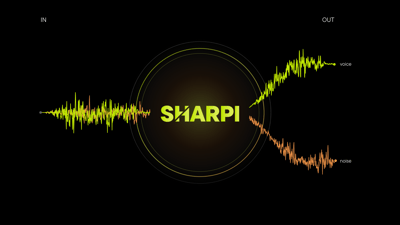
But there is a solution that goes beyond traditional soundproofing. Just as the AlexNet model learned to distinguish cats from dogs in images, modern AI audio enhancement identifies the "signal" (the human voice) and reconstructs it perfectly, ignoring everything else.
Here are the top six benefits of implementing a tool like Sharpi from Augmented Hearing in your contact centre.
1. Eliminate the Repetition Tax
When audio quality drops, repetition rises. It’s a simple mechanic: if an agent can't hear a customer (or vice versa), the conversation halts. "Sorry, can you say that again?" becomes the most expensive phrase in your lexicon.
Industry data suggests that a 250-seat contact centre could incur over £120,000 annually purely due to time spent repeating information. AI audio enhancement removes background noise from both ends of the call—the agent's and the customer's—ensuring the message lands the first time, every time.
2. Reduce Average Handling Time (AHT)
Background noise forces agents to speak slower and pause frequently for clarification. This artificially inflates your Average Handling Time (AHT).
By stripping away the acoustic clutter, AI enhancement allows for natural, fluid conversation. Agents can get straight to the point without battling interference, shaving critical seconds off every interaction. Across thousands of calls, these recovered seconds compound into massive operational savings.
3. Boost Accuracy and Lower Error Rates
In high-stakes industries like insurance or banking, hearing a 'B' as a 'D', or a '50' as a '15', can be disastrous. Research indicates that low-level noise can increase work error rates by up to 18%.
AI audio enhancement acts as a safety net for accuracy. By delivering crystal-clear audio, it drastically reduces the likelihood of mishearing data, preventing costly rework and potential regulatory breaches.
4. Protect Agent Health and Reduce Attrition
There is a direct link between "listening effort"—the mental energy required to hear—and exhaustion. When agents must constantly strain to separate a voice from the noise, they suffer from cognitive fatigue.
Furthermore, sudden spikes in noise (acoustic shock) can lead to increased heart rates and long-term health issues. AI solutions don't just clarify sound; they level it. By reducing the cognitive load on your agents, you protect their wellbeing, reducing burnout and the high costs associated with staff turnover.
5. Safeguard Compliance and QA
Automated Quality Assurance (QA) and sentiment analysis tools are only as good as the audio they process. Background noise pollutes the data stream, rendering expensive analytics tools inaccurate and causing "false negatives" in compliance monitoring.
AI audio enhancement cleans the feed before it reaches your analytics engine. This ensures that every keyword is captured, every sentiment is accurately gauged, and your compliance risks are minimized.
6. Enable a Truly Scalable Remote Workforce
Physical soundproofing—cubicles and acoustic foam—is irrelevant for a remote or hybrid workforce. You cannot soundproof an agent's kitchen table or control when their neighbour decides to renovate.
AI audio enhancement is software-based, meaning it scales instantly across global operations. Whether your agent is in a secure facility or a home office, the audio output remains consistent. It ensures a uniform "brand sound" regardless of the physical environment, giving you the flexibility to hire the best talent, anywhere.
The Strategic Imperative
Reducing noise is no longer just a facilities management issue; it is a strategic imperative for CX leaders. By identifying, extracting, and enhancing the human voice, you stop paying the Conversation Tax and start reclaiming the value in every conversation.