Imagine you are trying to listen to a single violinist performing in the middle of a busy train station.
A traditional noise reduction approach is like putting in earplugs. It muffles the trains and the crowds, but it also muffles the violin. Everything gets quieter, but the music—the part you actually want to hear—becomes dull and harder to distinguish.
Speech enhancement, on the other hand, is like giving the violinist a microphone and an amplifier while putting a soundproof glass wall between you and the station. The background chaos disappears, but the music remains crisp, clear, and perfectly audible.
For contact centre leaders, understanding this distinction is more than an audio engineering lesson. In an era of hybrid work and high customer expectations, knowing the difference between simply lowering the volume and actively elevating the conversation can be the difference between a frustrated customer and a resolved case.
Defining the Terms: It’s Not Just Semantics
While often used interchangeably in marketing brochures, “noise reduction” and “speech enhancement” rely on fundamentally different technologies and achieve different outcomes.
What is Noise Reduction?
Noise reduction (often called noise suppression) is a subtractive process. Its primary goal is to identify non-stationary acoustic noise—like a humming air conditioner or street traffic—and remove it from the audio signal.
Historically, this has been achieved through spectral subtraction. As outlined in seminal research by Boll (1979), this method estimates the noise spectrum and subtracts it from the noisy speech. While effective at lowering the overall decibel level of background sounds, this method often leaves behind “musical noise”—random, robotic artifacts that can make the remaining voice sound processed or underwater.
The limitations of noise reduction include:
- Signal Distortion: In aggressively removing noise, parts of the human speech frequency can be cut, making the agent sound muffled.
- The “Babble” Problem: Traditional suppression struggles to distinguish between the primary speaker and background chatter (other people talking), as both occupy the same frequency range.
What is Speech Enhancement?
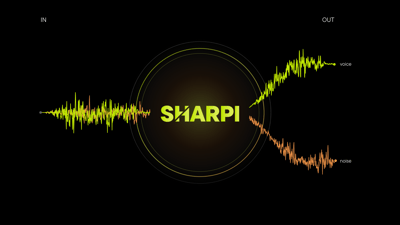
Speech enhancement is a reconstructive process. Instead of focusing on what to remove, it focuses on what to keep.
Modern speech enhancement uses deep learning and AI to identify the unique biometric characteristics of the primary speaker’s voice. It treats the human voice as the “signal” and everything else—including other human voices—as “noise.”
Think of it like the AlexNet model learning to distinguish cats from dogs in images. Older technology tried to blur the background; modern AI identifies the "cat" (the human voice) and reconstructs it perfectly, ignoring the background entirely.
The Metrics That Matter: How We Measure Quality
In the world of signal processing, we don’t just guess which sounds better; we measure it using standardized frameworks. The gold standard for evaluating these technologies is ITU-T Recommendation P.835.
Established by the International Telecommunication Union, this methodology acknowledges that a listener’s experience is made up of three distinct components:
- SIG (Signal Distortion): How natural does the voice sound?
- BAK (Background Intrusiveness): How noticeable is the background noise?
- OVRL (Overall Quality): The combined quality of the experience.
Why This Matters for Contact Centres
A traditional noise reduction tool might score well on BAK (the noise is gone) but poorly on SIG (the agent sounds like a robot). This trade-off is dangerous in a customer service context.
If an agent’s voice is distorted, the customer’s brain has to work harder to decode the message—a phenomenon known as cognitive load. Research from the Journal of Environmental Psychology suggests that acoustic distractions and low-quality audio can reduce cognitive performance by up to 15%.
Speech enhancement aims for high scores across the board: removing the noise (High BAK score) while preserving the natural richness of the voice (High SIG score).
Why Upgrade to Speech Enhancement?
Moving from suppression to enhancement isn’t just about audio fidelity; it’s about operational efficiency.
1. Reducing the “Repetition Tax”
When audio quality dips, repetition rises. If an agent has to repeat a policy number or a customer has to repeat their address, Average Handling Time (AHT) inflates. Industry data suggests a typical 250-seat contact centre incurs approximately £123,000 annually in costs purely due to time spent repeating information. Speech enhancement eliminates this friction, streamlining every interaction.
2. Preventing Errors and Compliance Risks
In regulated industries like insurance and finance, clarity is a legal requirement. Mishearing a 'No' for a 'Yes' due to background interference constitutes a compliance failure - not only that, but research from Cornell University also indicates that low-level noise can increase work error rates by 18%. Speech enhancement ensures that the audio data fed into call recordings and analytics platforms is pristine, protecting data integrity.
3. Solving the Hybrid Work Challenge
Physical soundproofing (cubicles, acoustic foam) works for office reverberation but is useless for a remote agent’s barking dog or doorbell. Speech enhancement is software-based, meaning it scales instantly across global operations, ensuring a consistent “brand sound” regardless of whether the agent is in a secure facility or a kitchen table.
The Future is Crystal Clear
The battle for customer loyalty is won and lost in the nuances of conversation. While noise reduction technology served its purpose in the era of landlines and cubicles, the complex acoustic environments of modern contact centres require a more sophisticated approach.
By prioritizing speech enhancement, businesses do more than just silence the noise. They amplify the value of every word, ensuring that when their agents speak, the world listens without effort.